Why follow-up imaging recommendations go unanswered, and how to close the loop

Writing in Diagnostic Imaging in 2020, Dhruv Chopra, then CEO of Collaborative Imaging (now CIVIE), argued that too many recommendations for additional imaging never turn into an exam. When a radiologist spots an incidental finding and the follow-up never happens, the patient can come to harm and the practice can end up legally exposed.
What the research found
Chopra drew on a study from UC Davis Medical Center in which researchers reviewed 539 CT reports that carried recommendations for additional imaging because of incidental findings, then checked patient charts to see whether providers followed through.
Adherence depended heavily on care setting and on who received the recommendation. When the primary care provider was at the same institution, adherence was 66.7 percent for outpatients, 46 percent for emergency department patients and 36 percent for inpatients. For outpatients, primary care providers followed up 67 percent of the time, internal medicine subspecialists 50 percent and surgeons 37.7 percent.
Communication is the weak point
The study’s authors named lapses in communication as the main cause. Documenting the need for follow-up in the discharge summary raises adherence, but that detail is often missing, and patients may only see results once they are released.
Chopra illustrated the stakes with an Illinois case. A lung mass found on a 2017 CT was given a follow-up recommendation that was never shared with the patient. By 2019 the cancer had metastasized, the patient died, and his family received a $7.5 million settlement.
What practices can do
The article’s recommendations are practical:
- Capture contact details and preferences accurately, so patients who miss appointments or change providers can still be reached.
- Tell patients why the follow-up matters, which makes them more likely to keep the appointment.
- Use technology to track recommendations. Texas Radiology Associates uses a system that flags studies needing follow-up, confirms the referring physician received the information and raises an alert if the exam doesn’t happen. Managing partner John Kim said this “resulted into a significant decrease in missed recommendations.”
Chopra also noted that the ACR was developing a quality measure for incidental findings, working with the American College of Emergency Physicians on guidance for findings made in emergency settings.
Why it still matters
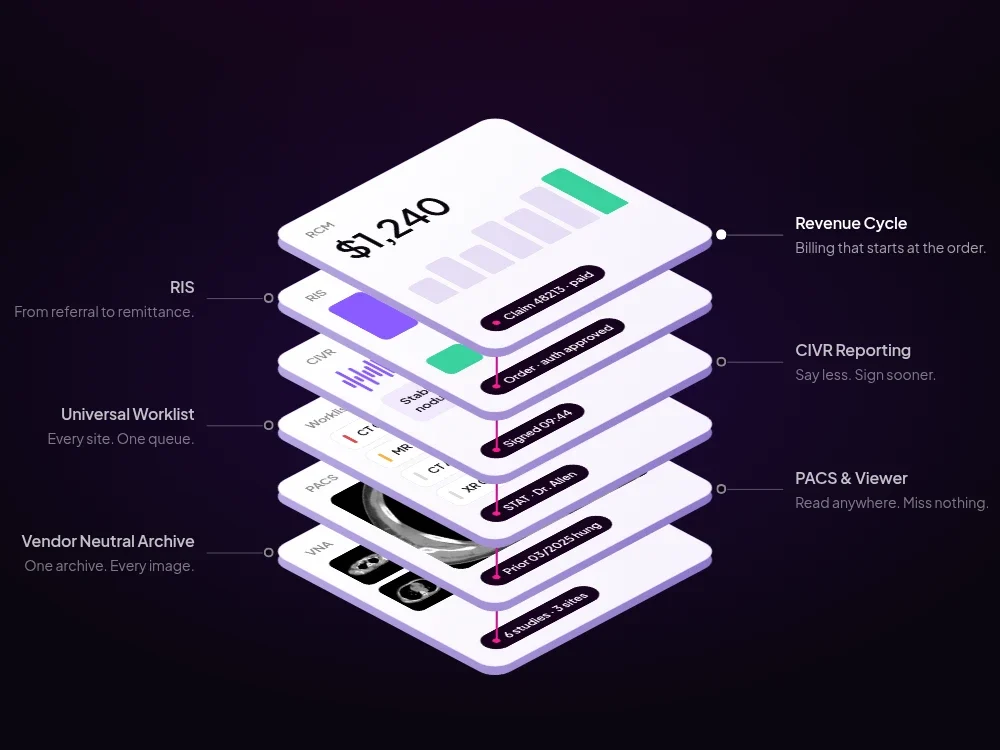
Incidental findings haven’t become any rarer, and the gap Chopra described sits between departments, not inside one. CIVIE’s follow-up recommendations workflow is built around that same idea: track each recommendation until the exam is done.
Source: “Communication Critical to Providers Adhering to Follow-Up Recommendations,” Dhruv Chopra, Diagnostic Imaging, October 13, 2020.